Analyzing activation sequences for time-bound free credits linking digital poker circuits with virtual lotteries and live event wagering portals
Dana Lorenz · Nov 4, 2026
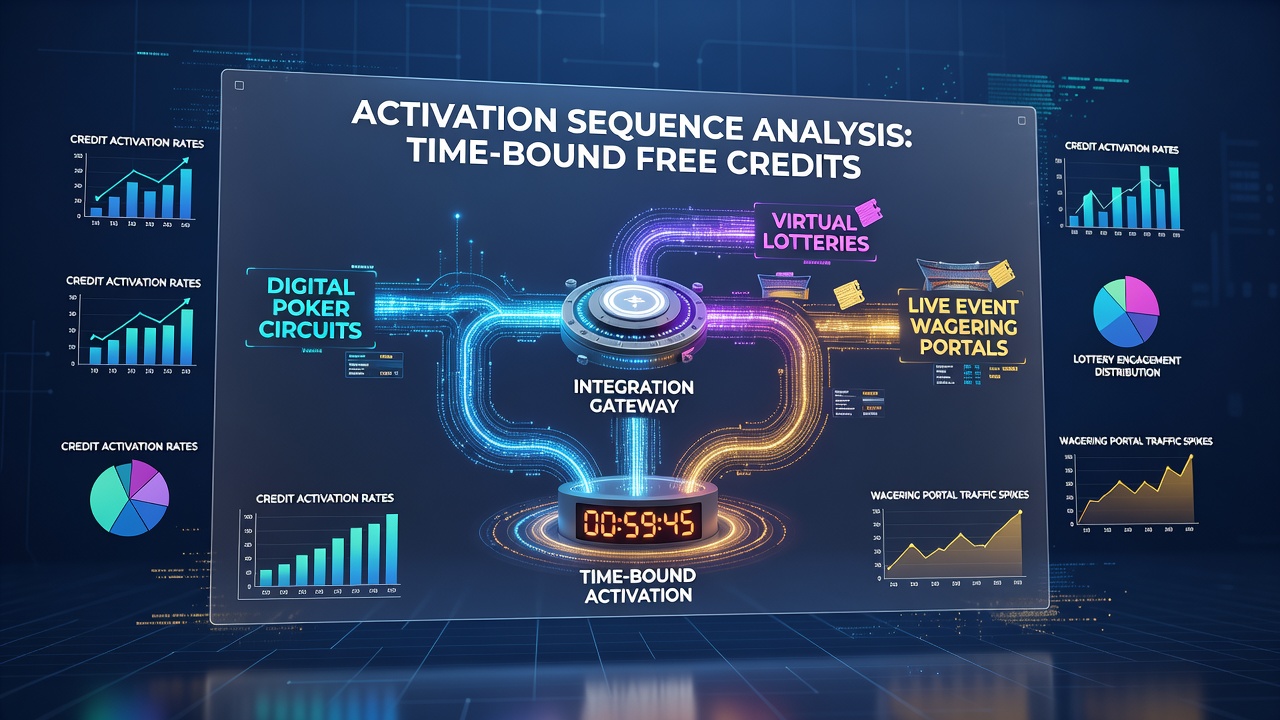
Analyzing activation sequences for time-bound free credits linking digital poker circuits with virtual lotteries and live event wagering portals
Digital gaming platforms have developed structured activation sequences that distribute time-bound free credits across interconnected services, and these sequences typically begin with user registration on one circuit before triggering eligibility checks that route credits toward poker tables, lottery draws, or live event wagers within defined windows.
Operators program these sequences so that an initial credit activation in a poker environment can unlock secondary offers once a player completes a set number of hands or reaches a threshold in virtual lottery entries, while live event wagering portals receive the final link in the chain when users migrate from the prior two activities during the same promotional period.
Sequence mechanics across platform types
Activation begins when a user account satisfies identity verification and location parameters, after which the system assigns a time-stamped credit that expires after a fixed interval such as seventy-two hours or seven days, and the credit carries metadata that determines which downstream platforms can redeem it without additional deposits.
Researchers tracking these flows note that poker circuits often serve as the entry point because hand volume provides measurable activity signals, whereas virtual lottery networks rely on draw schedules that align with credit expiry dates, and live event wagering portals adjust odds displays to capture users who arrive with remaining credit balances.
Data patterns observed in late 2026
Platform analytics collected through November 2026 indicate that sequences spanning all three categories recorded higher completion rates when the poker segment required at least fifteen hands before lottery access opened, and the same datasets show that credits reaching live event portals carried an average remaining validity of eighteen hours at the moment of transfer.
According to figures published by the American Gaming Association, cross-platform credit redemptions increased by fourteen percent during the final quarter of 2026 compared with the same period in 2025, with the largest share of transfers moving from poker to virtual lotteries before terminating at live event interfaces.
Technical triggers and expiry rules
Systems enforce expiry through server-side timers that disable unused credits at midnight in the user’s registered time zone, and the same timers prevent reactivation once a sequence has advanced past any single stage, thereby directing remaining value exclusively to the next platform in the programmed order.

Developers incorporate conditional flags that detect whether a user has already claimed a lottery draw or placed a live wager, and these flags adjust the final credit value downward if earlier stages were skipped, which maintains sequence integrity while discouraging selective participation.
Regulatory considerations in multiple jurisdictions
Canadian provincial regulators require operators to publish the exact expiry intervals and transfer conditions attached to each credit type, while Australian state authorities mandate that all activation sequences display remaining time in real time on every connected interface, and these rules apply uniformly whether the credit originates in poker, lottery, or wagering environments.
Industry reports compiled by the National Association of Gambling Studies document that transparent expiry messaging correlates with lower dispute volumes, and the same reports note that sequences linking multiple product categories must include clear statements about which platform receives the final credit segment.
Conclusion
Activation sequences for time-bound free credits continue to function as structured pathways that move value from poker circuits into virtual lotteries and onward to live event wagering portals, with technical timers, regulatory disclosures, and platform-specific rules shaping how users encounter and exhaust those credits. Data collected through November 2026 shows measurable transfer volumes across the three categories, and compliance frameworks in several regions now specify disclosure standards that apply to every stage of the sequence.